The Roof Test: Property Tenure as Strategy Across the 2026 Top 100
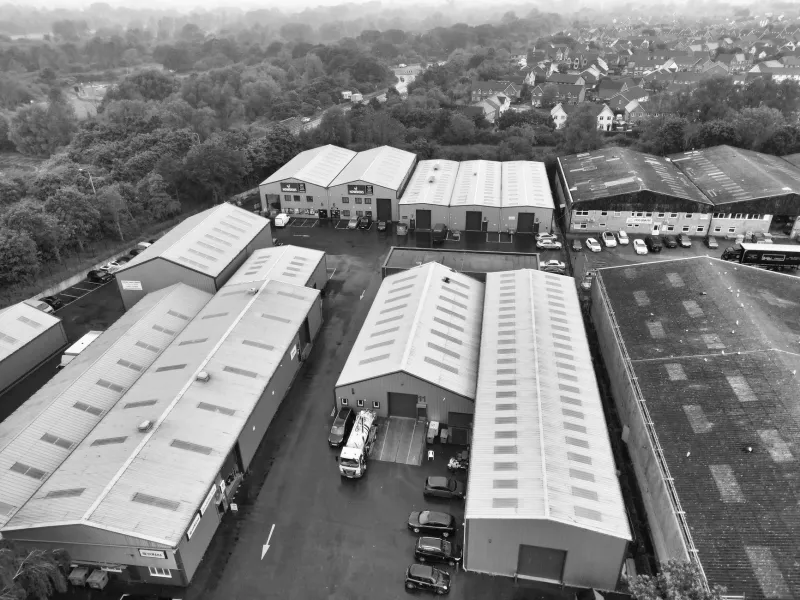
Property is rarely the first line item a chief executive reaches for when explaining performance. Yet across Britain’s 2026 Top 100, the tenure of the buildings in which firms operate is doing quiet strategic work. It shapes debt capacity, covenant headroom, exit options and the speed at which a company can reshape itself. In a higher-rate environment, the question is not simply whether a business owns its premises. It is whether ownership gives it room to manoeuvre — or fixes it in place.
Why tenure belongs in the league table
The 2026 Roof Test ranks the Top 100 on a composite of property intensity, lease liabilities and footprint flexibility. The aim is not to reward asset-light businesses by default, nor to celebrate freehold accumulation for its own sake. It is to test which companies have aligned their property holdings with their operating model.
Three measures sit behind the ranking. The first is property intensity: the share of tangible assets tied up in land and buildings, together with the proportion of sites held freehold. The second is lease burden: right-of-use assets and lease liabilities relative to operating profit and debt, adjusted for remaining term and indexation. The third is optionality: the practical ability to sublet, dispose, reconfigure or vacate space without disrupting customers, staff or regulatory obligations.
The resulting table separates companies that own their way to resilience from those that own their way into rigidity — and it distinguishes tenants with genuinely flexible leases from tenants carrying debt-like commitments under a different name.
The freehold paradox
Freehold ownership is often treated as a mark of conservatism. In the right hands, it is the opposite. A company that owns its distribution hub, manufacturing site or headquarters can borrow against it, control its energy retrofit programme and avoid the renewal risk that comes with a landlord’s timetable. For capital-intensive operators, freehold can be a strategic weapon: it lowers occupancy cost over long horizons and gives management direct control over the physical assets on which output depends.
But the table’s upper quartile is not populated solely by freeholders. Several asset-heavy companies score poorly because their property is specialised, poorly located or too large for current demand. A freehold chemical plant or cold-storage facility may be valuable on paper, but it is not liquid. If the operating footprint changes, the balance-sheet anchor becomes a drag. The same is true of headquarters bought at the top of a regional market and now carried at valuations that flatter the accounts but not the exit.
The Roof Test therefore rewards freehold where it is matched by operational need and disposal headroom. It penalises freehold where it looks like a store of value but functions as a barrier to restructuring.
Leases are not all alike
Leasehold carries a reputation for flexibility, but not all leases are flexible. The ranking distinguishes between short, breakable commitments and long, indexed liabilities that behave like debt. Under current accounting, right-of-use assets and lease liabilities sit on the balance sheet, and lenders increasingly treat them as part of the capital structure. A retailer with a portfolio of twenty-year leases and upward-only reviews is not asset-light in any meaningful sense. It is a property company with a trading operation attached.
By contrast, the strongest leasehold scores belong to businesses with short terms, genuine break options and the contractual freedom to sublet. These companies have converted occupancy from a fixed cost into a variable one. They can shrink a site, share a floor or move to a better location without waiting for a landlord to agree terms. In sectors where demand is uneven — professional services, technology, light logistics — that optionality is worth more than the apparent security of a long lease.
The flexibility premium
The 2026 table suggests that the market is beginning to price optionality more explicitly. Businesses with flexible footprints score better on the Roof Test even when their headline occupancy costs are higher. The reason is straightforward: flexibility preserves the ability to respond to demand without a capital event. A company that can sublet surplus space or exit a lease at short notice has a lower break-even point and a stronger hand in negotiations with lenders, landlords and customers.
This is not an argument for perpetual short-termism. Some operations need the certainty of a long lease or the control of a freehold. Manufacturing lines, research facilities and regulated infrastructure cannot be moved like a sales office. The ranking recognises that. Its point is that tenure should follow strategy, not precedent.
The regional dimension matters here. Property markets outside London and the South East often offer better freehold economics, but they can also be thinner and slower to transact. A northern industrial freeholder may hold a valuable asset with few comparable buyers. A southern leaseholder may pay more per square foot but retain the ability to exit. The Roof Test captures both the balance-sheet position and the liquidity of the underlying market.
What leaders should take away
For boards, the lesson is to treat property as an operating decision rather than a treasury afterthought. The first question is not whether to buy or lease. It is what the business needs to be able to do in three years that it cannot do today. If the answer involves shrinking, expanding, reconfiguring or relocating, the tenure should preserve that option. If the answer involves long-horizon investment in fixed assets, freehold may be the better route — provided the asset can be financed, insured and eventually sold.
The 2026 Top 100 contains both models. What separates the strongest performers on the Roof Test is not the label on the title deed. It is the fit between the building, the balance sheet and the strategy. In a rate environment that punishes static capital, the companies sitting on the right side of that divide are those that own their optionality — whether or not they own the roof.