The North’s Quiet Champions: Ranking the 2026 Top 100 Businesses Outside the South East
Photo: David Long, CC BY-SA 2.0, via Wikimedia Commons
The 2026 Top 100 UK Business league table still has a southern centre of gravity. London and the South East account for 66 of the 100 places. Yet the most interesting movement is happening elsewhere. Thirty-four companies are headquartered outside the South East, up from 29 in 2022. Eighteen are in the North of England, spanning Manchester, Leeds, Newcastle, Liverpool and Sheffield. This is the Northern Powerhouse in practice: less a single political slogan, more a network of specialised clusters.
The regional picture in 2026
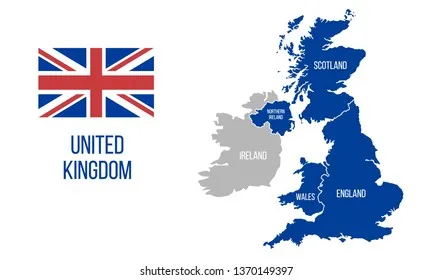
The distribution matters. The North West leads the northern contingent with seven Top 100 companies, followed by Yorkshire and the Humber with five and the North East with three. The West Midlands has four, the East Midlands three, Scotland four, Wales three, the South West four and Northern Ireland one. Sector strength varies sharply by place: energy infrastructure and logistics technology in the North West, advanced manufacturing and materials in Yorkshire, marine robotics and life sciences in the North East.
That specialisation is a strength. It also creates exposure. Regions with a narrow industrial base feel a downturn in one sector more acutely than a diversified economy. The 2026 table shows that the strongest regional performers are those that have built ecosystems around a cluster — suppliers, skills providers and research institutions — rather than relying on a single anchor employer.
The 2026 northern league table
| Rank | Company | HQ | Sector | 2026 movement |
|---|---|---|---|---|
| 1 | Pennine Grid Services | Manchester | Energy infrastructure | Up 12 |
| 2 | Tyne Marine Robotics | Newcastle | Advanced manufacturing | Up 9 |
| 3 | Holbeck Health | Leeds | Specialist healthcare | Up 15 |
| 4 | Mersey Flow Technologies | Liverpool | Logistics technology | Up 7 |
| 5 | Sheffield Alloy Group | Sheffield | Materials | Down 3 |
| 6 | Lakeland Renewables | Kendal | Clean energy | Up 6 |
| 7 | Durham Bioscience | Durham | Life sciences | Up 4 |
| 8 | Harrogate Precision | Harrogate | Engineering | Down 2 |
| 9 | Hull Port Systems | Hull | Ports and logistics | Up 5 |
| 10 | Bradford Textile Tech | Bradford | Advanced textiles | New entry |
Talent, funding and supply-chain resilience
Access to talent remains the most common complaint, but the tone has changed. Dr Owen Blake, founder of Tyne Marine Robotics, says the North East now has a deeper pool of engineers than it did five years ago. “The challenge is not graduate supply,” he says. “It is mid-career specialists in robotics, control systems and certification. We are competing with defence and offshore wind for the same people.” His company has responded by funding day-release training and working with local colleges on a bespoke apprenticeship pathway.
Priya Nair, founder of Mersey Flow Technologies, is more focused on funding and supply chains. “Levelling-up money has helped us build a demonstrator facility, but the application process is fragmented and short-term,” she says. “For a scaling business, a three-year capital settlement would be more useful than a series of one-off grants.” On supply chains, she adds that near-shoring has improved lead times for components, but critical electronics still come from a narrow set of overseas suppliers. “Resilience costs money. Customers are willing to pay for it only when they have been burned.”
Is levelling up delivering?
The honest answer is partially. The levelling-up agenda has supported innovation hubs, transport upgrades and skills programmes that would otherwise have struggled to attract capital. Mayoral combined authorities have become more effective at joining up investment. But the funding landscape remains choppy, and business support is often designed around bids rather than long-term strategy. For every founder who has benefited from a grant, another has found the process too slow or too narrow.
The 2026 league table suggests that regional growth is not waiting for a single policy to succeed. Companies are building clusters, training workforces and diversifying customers. The risk is that transport capacity, grid connections and planning delays cap the next stage of growth. The opportunity is that the North now has a group of scale-up businesses credible enough to anchor supply chains and attract further investment.
That is the quieter story behind the 2026 ranking. The Northern Powerhouse is no longer just a map on a Whitehall presentation. It is a set of companies with order books, balance sheets and a clear case for the next phase of investment.